
Bruketa&Lactalis
The collaboration between Bruketa& and Lactalis began in 2023. Since then, they have worked together on several different projects.

Designing a graphic system for the global Museum of Illusions brand
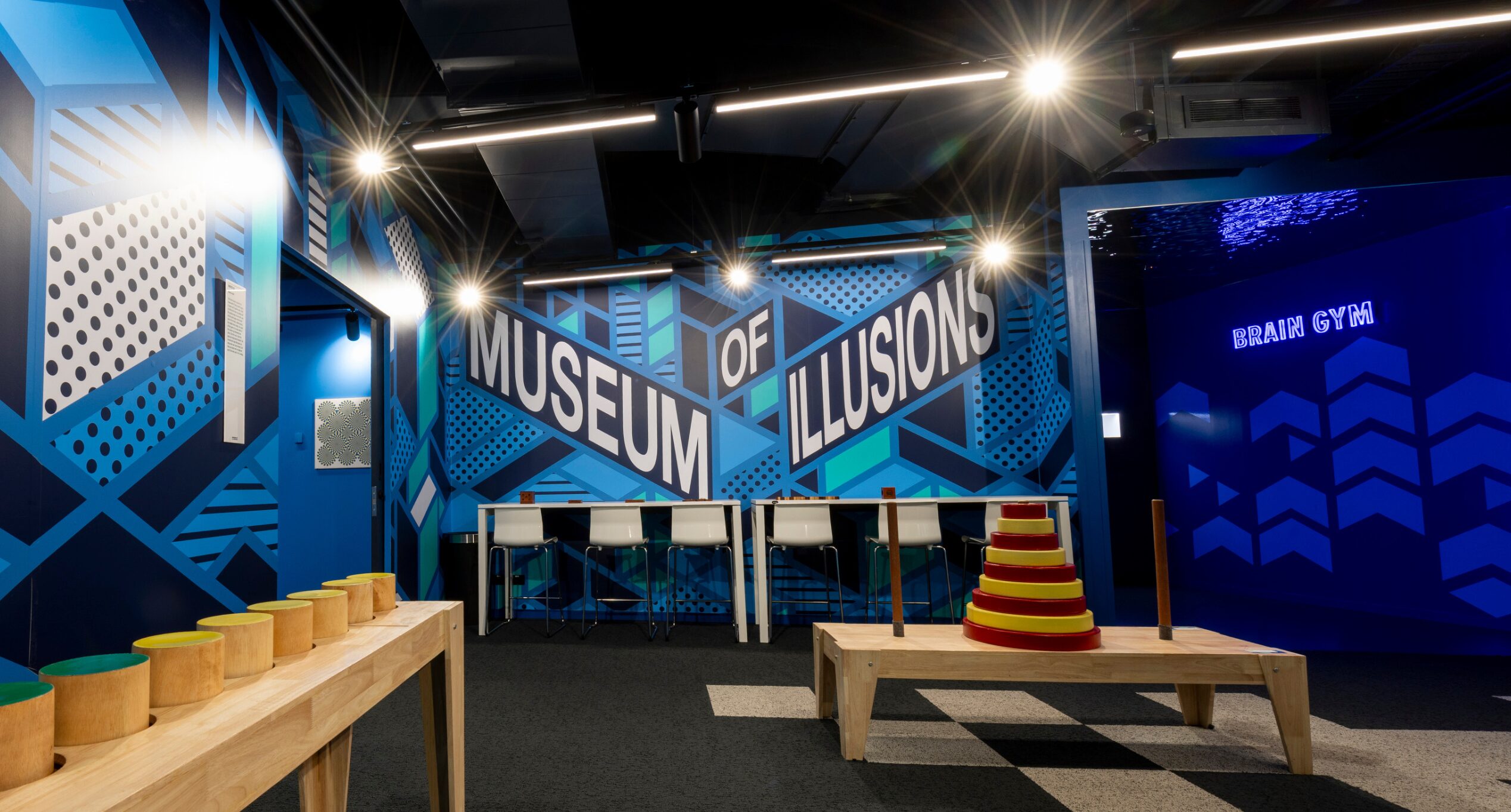
Today, the Museum of Illusions is not only built on its exhibits, but also on the overall experience orchestration. From the very first impression and moving through its rooms to far-reaching photos, every interaction with the visitor shapes the brand. In such context, the identity no longer hinges on the logo and communication, but expands into the space – through graphics, signage, scenography and meticulously composed dramaturgy of the visit.
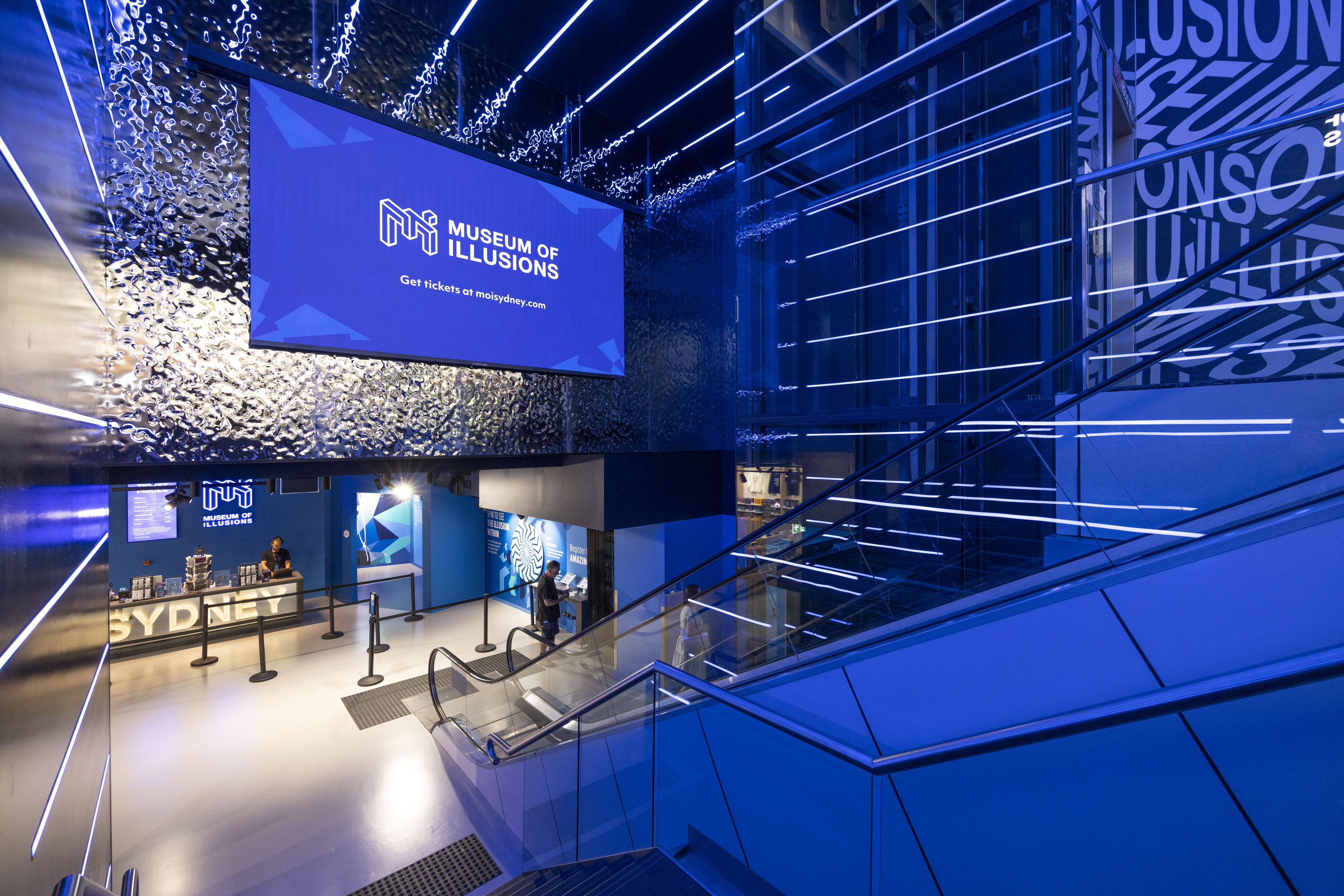 The Museum of Illusions has been developing globally with a clear goal: to align the experience through a network of over 70 sites spanning 29 countries and five continents. It all started in Zagreb, where the first Museum of Illusions was opened in 2015. Nowadays, it is an internationally iconic concept, most prevalent in Europe and North America, transforming ever so clearly from a conventional museum into an experience brand.
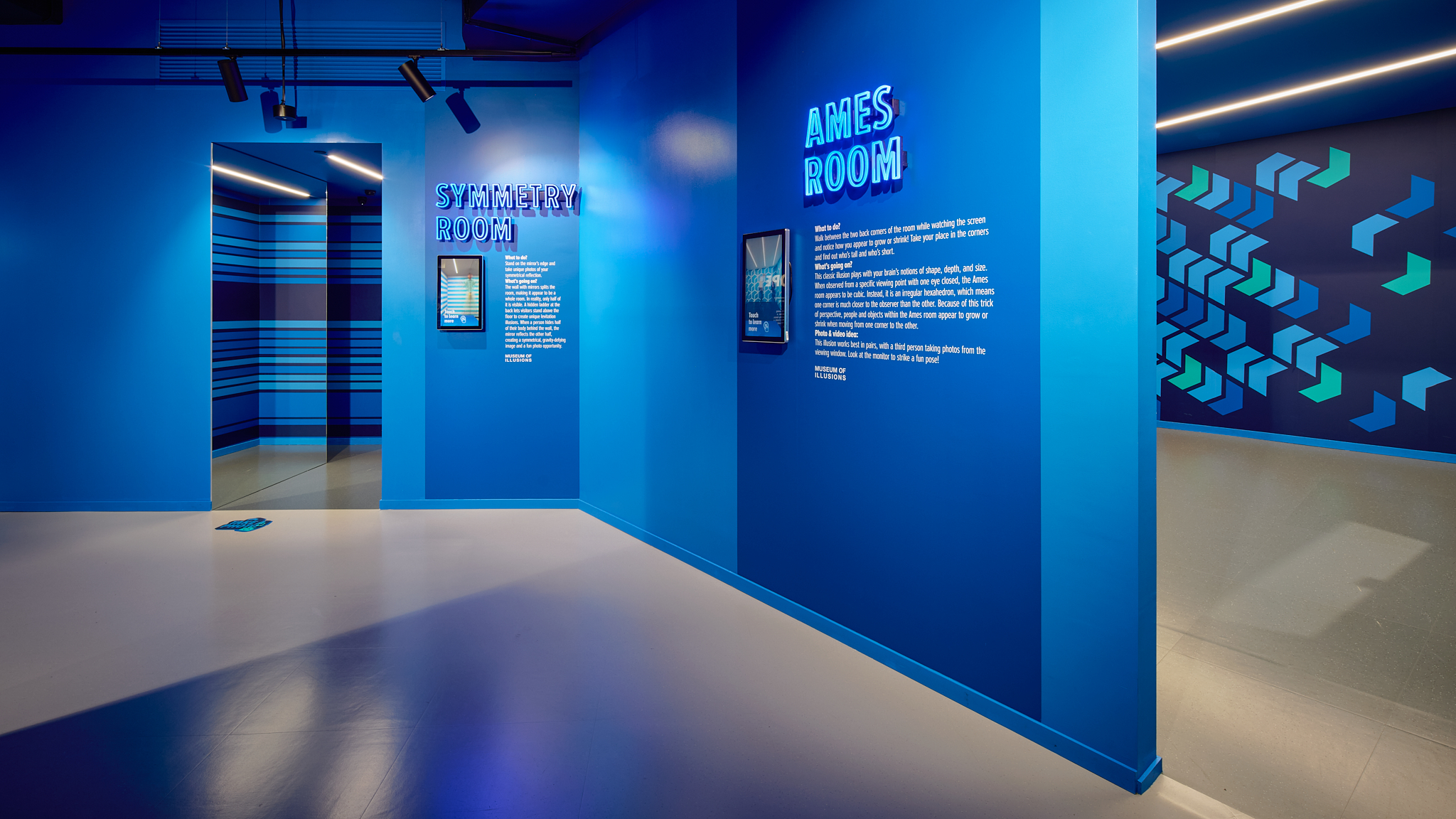 In that process, Brigada assumed a strategic role in designing the spatial experience through a systematically conceived visitor journey, the positioning of exhibits, and the introduction of new zones that themselves become exhibits. The goal was not only to improve the spatial organization, but also to intensify visitor engagement: to introduce more rhythm, more surprise, and more carefully calibrated perceptual shifts that make the experience more dynamic, layered, and memorable.
 The agency Bruketa&Žinić&Grey was brought into the project to develop a graphic system that would translate this strategy into a clear, consistent, and recognizable visual language. Within the spatial dynamics, it was necessary to design graphics that would naturally integrate into the interior, respect the existing key identity elements of the Museum of Illusions – above all, the logo and its distinctive color palette, while further enhancing the authenticity of the overall experience.
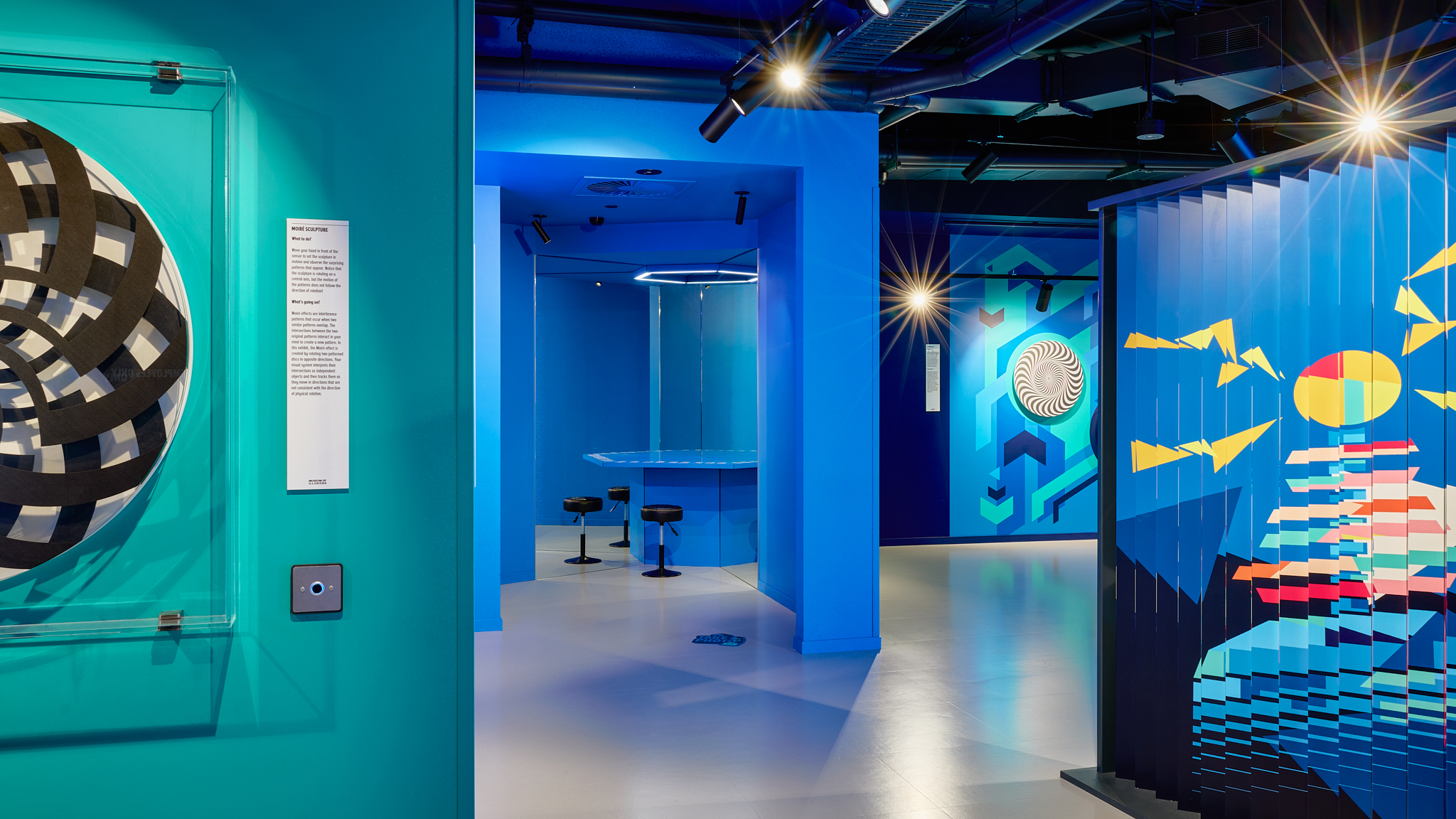 The Museum of Illusions brand is specific as it invites visitors not only to observe, but also to participate. Photos taken within spatial illusions are not content add-ons, but an integral part of the experience. The illusion is not space-bound; it is carried on, by photo shots, screen and sharing. This is why it required coming up with over twenty versatile graphic solutions enhancing specific installations and areas, while making sure the brand remains clearly recognizable beyond the museum boundaries – in photos, videos and social media posts.
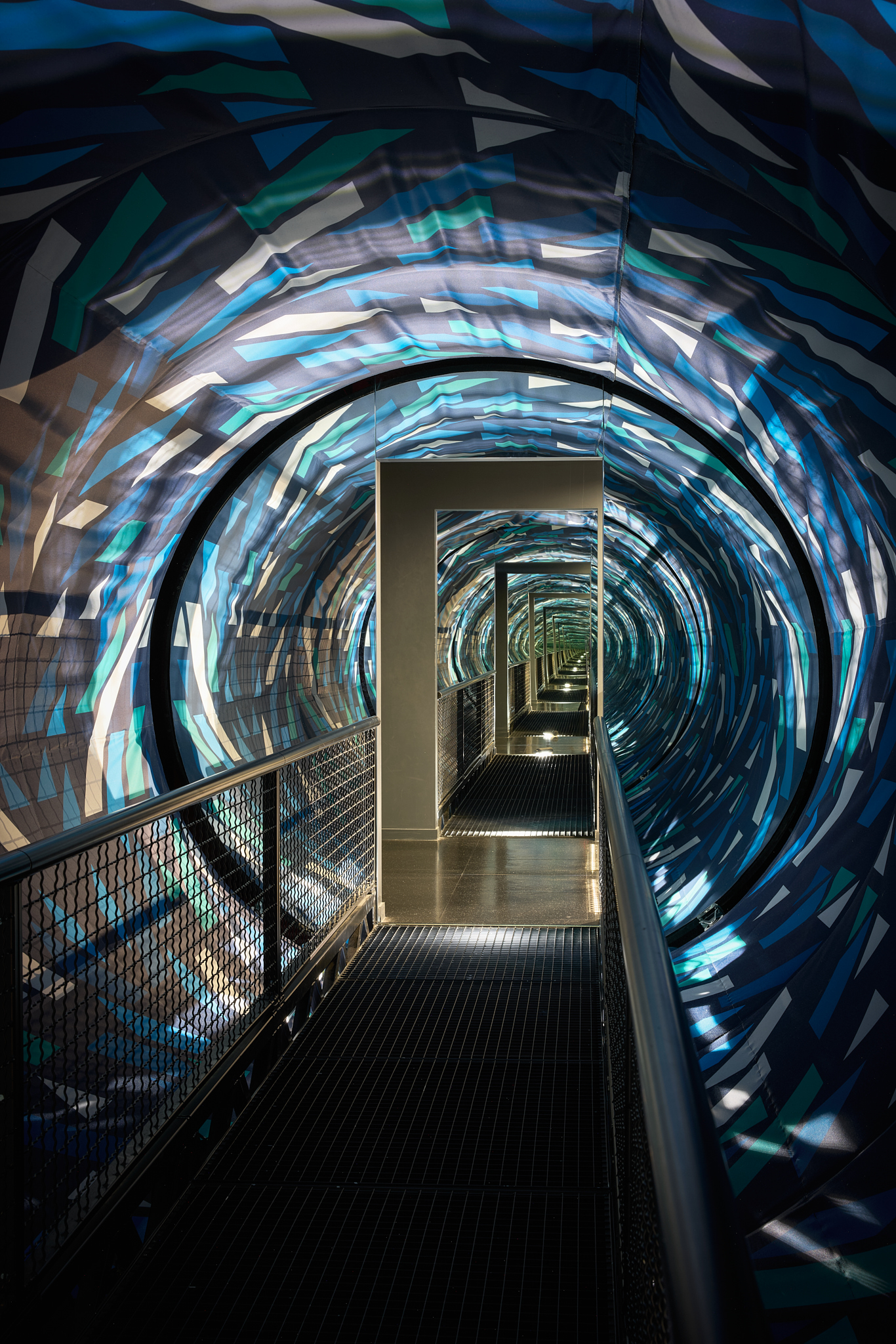
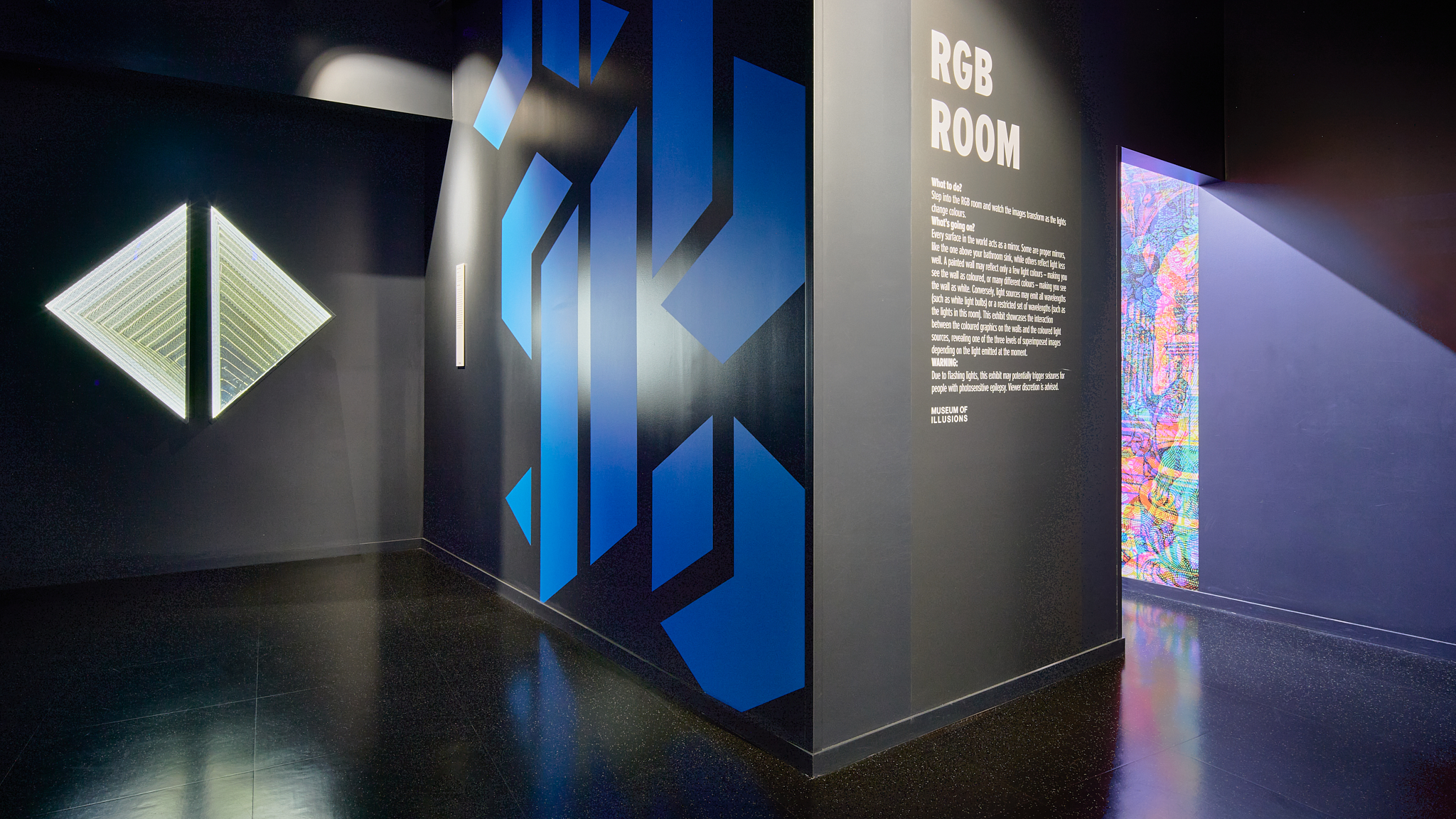 However, these graphics have more than a merely aesthetic role. They direct the gaze, reinforce the perception, set the moving pace, and subtly guide the visitor through the space. Hence, they function as a visual identity, a guiding tool, and an extended illusion at the same time.
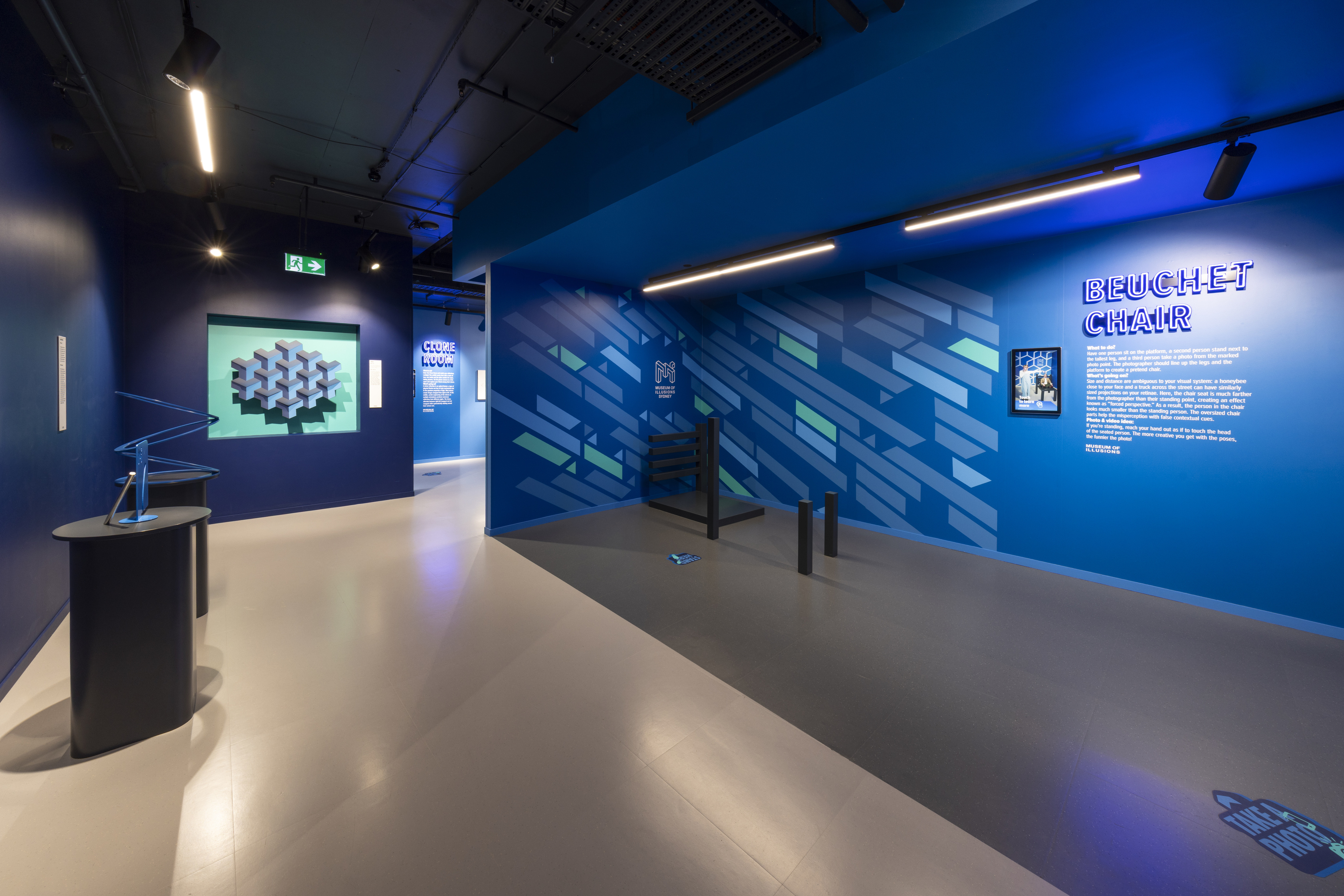 The graphic system was designed from the elements of the Museum of Illusions logo that is from its negative spaces. These elements have been turned into building blocks of a flexible system of patterns which, within the same modular system, create a series of totally distinct spatial impressions adhering to various principles of repetition and scaling. Color combinations and scale shifts add variety, but leave the coherence intact. As a result, the system is rigorous enough to be consistent with the brand, but flexible enough to respond to a variety of spatial and perceptual conditions.
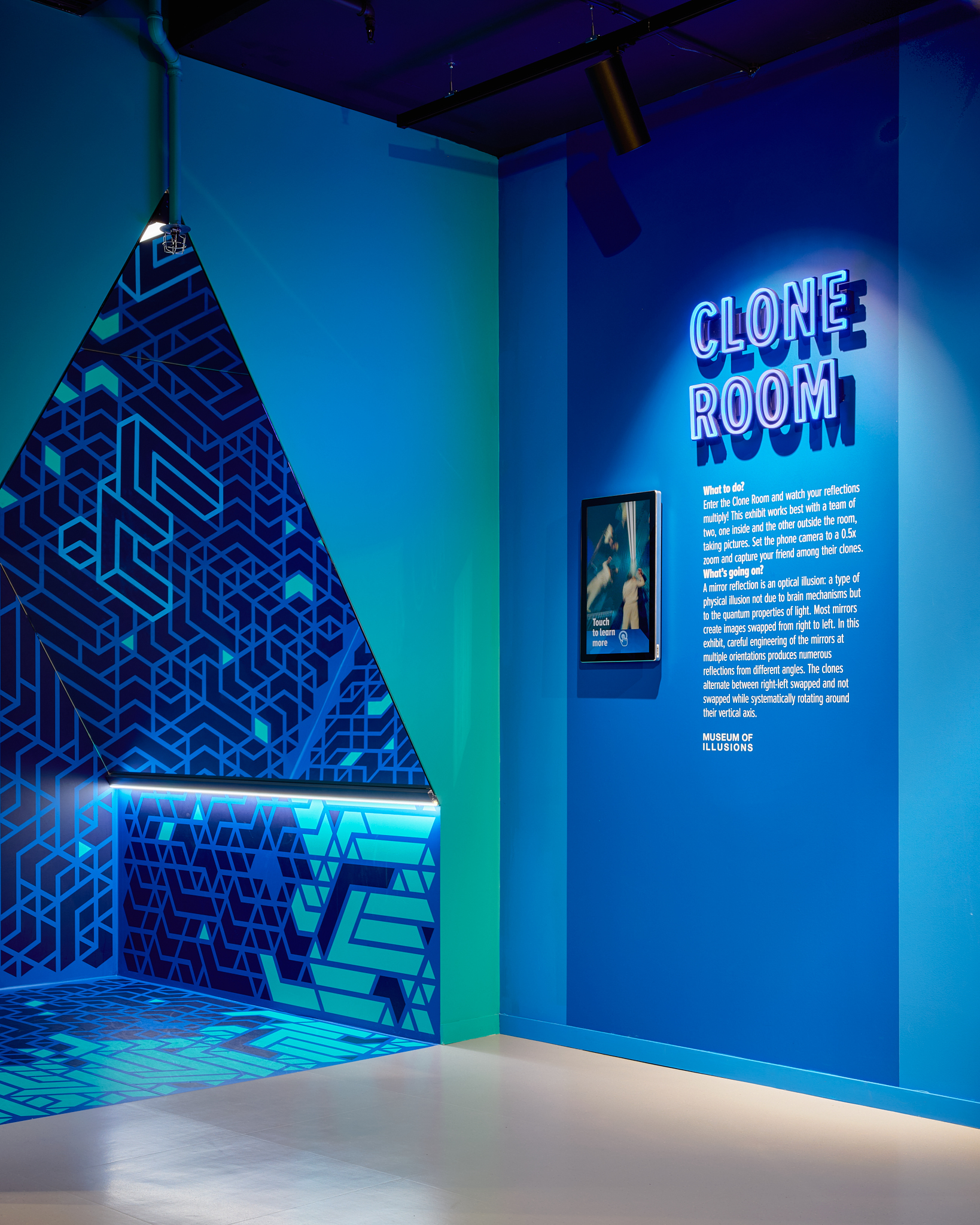 The key to the designing process was: to create graphics contributing to the illusion rather than competing with it, focusing attention rather than stealing it, and acting as an active layer of experience rather than as a decoration. For this reason, specific solutions were tried and tested in real space, including full scale trials, in order to align the relationship between graphics, architecture and the perception effect.
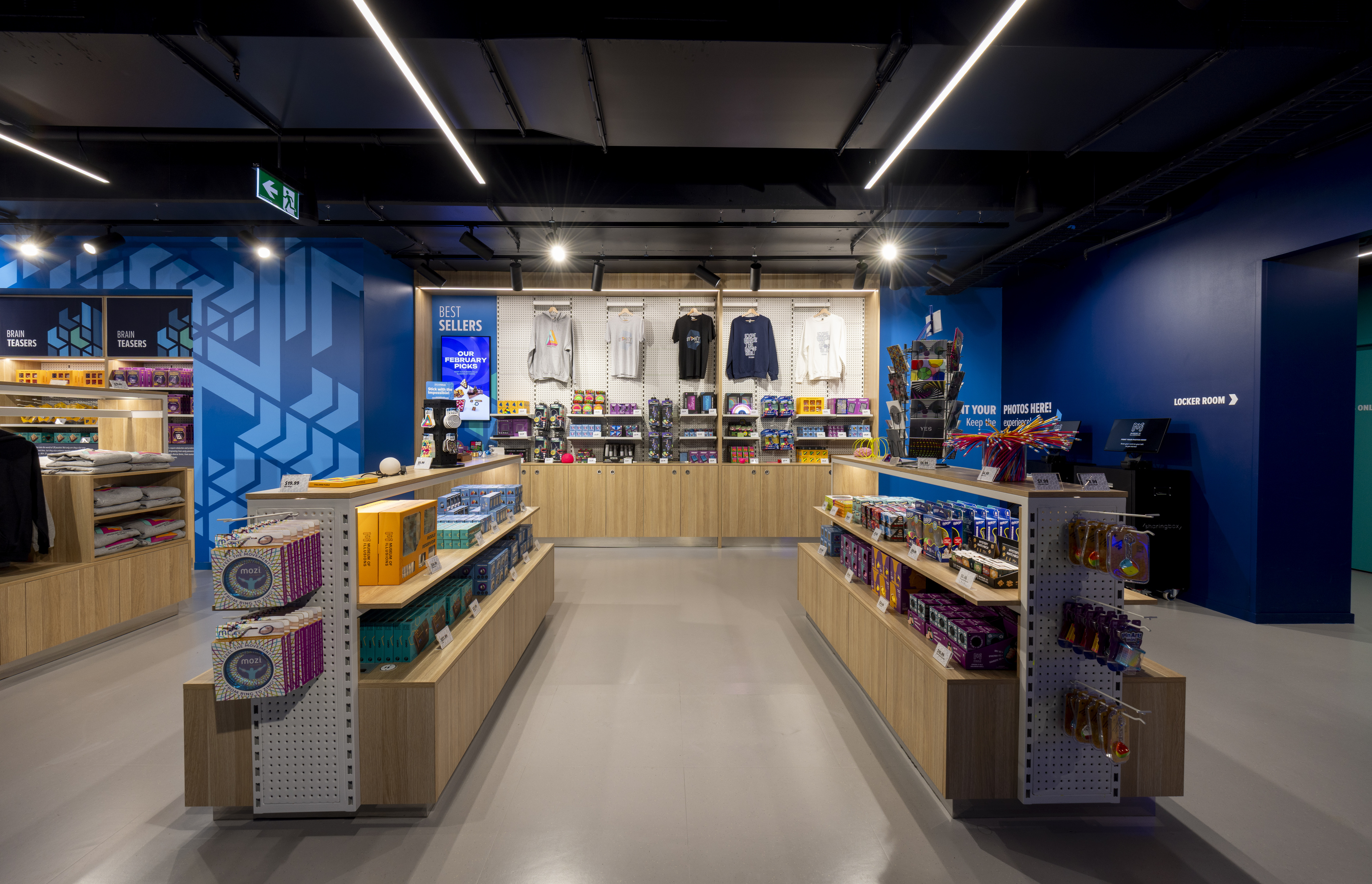 The resulting system takes the Museum of Illusions further away from the conventional museum typology, and reinforces its position as an immersive experience brand. Today, the brand operates as a globally recognizable framework, but also as a flexible tool adaptable to a variety of locations, while preserving its identity. The space, graphics and movement create an experience that is not only consistent, but also shareable, memorable and vivid, in a manner befitting a modern brand.
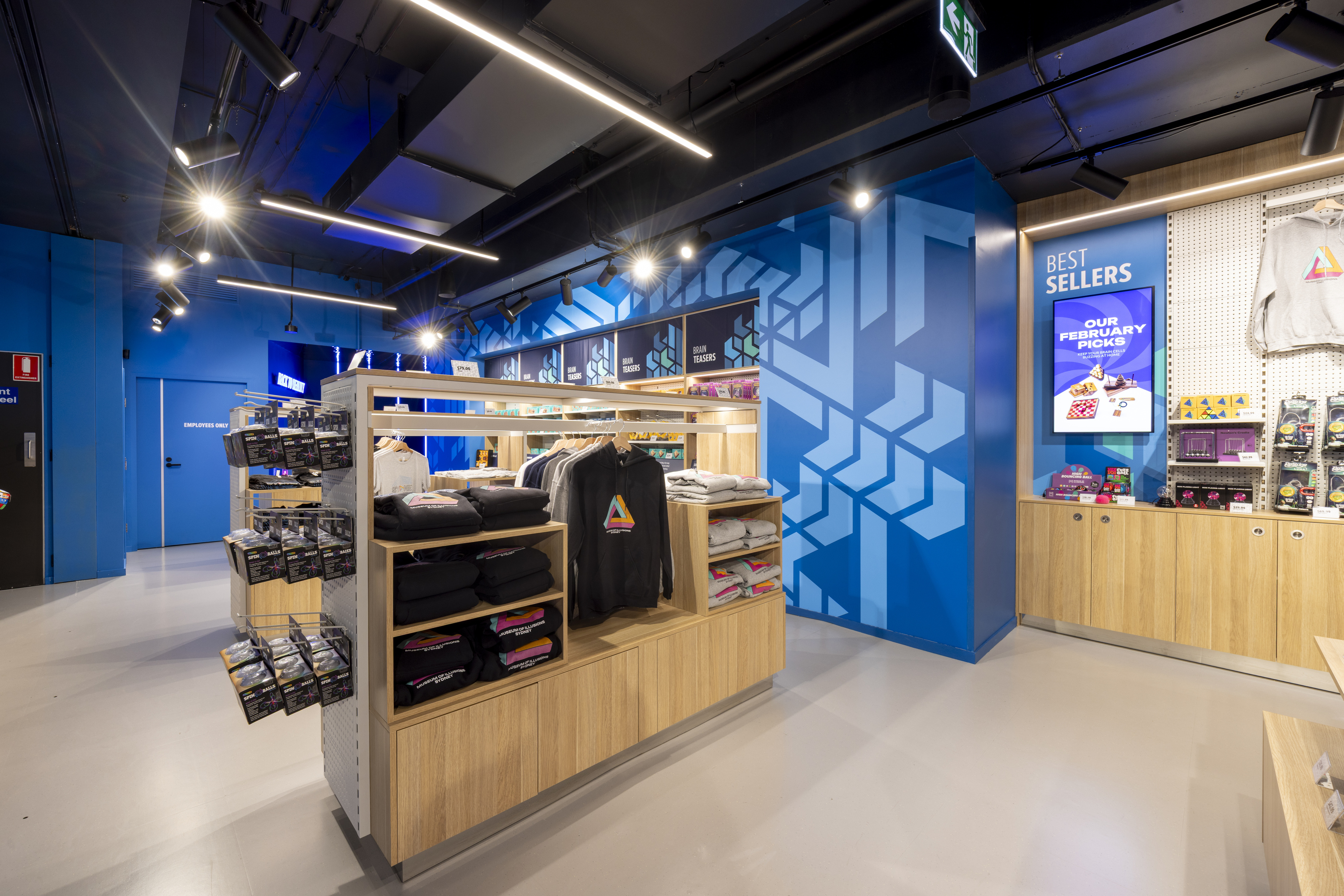
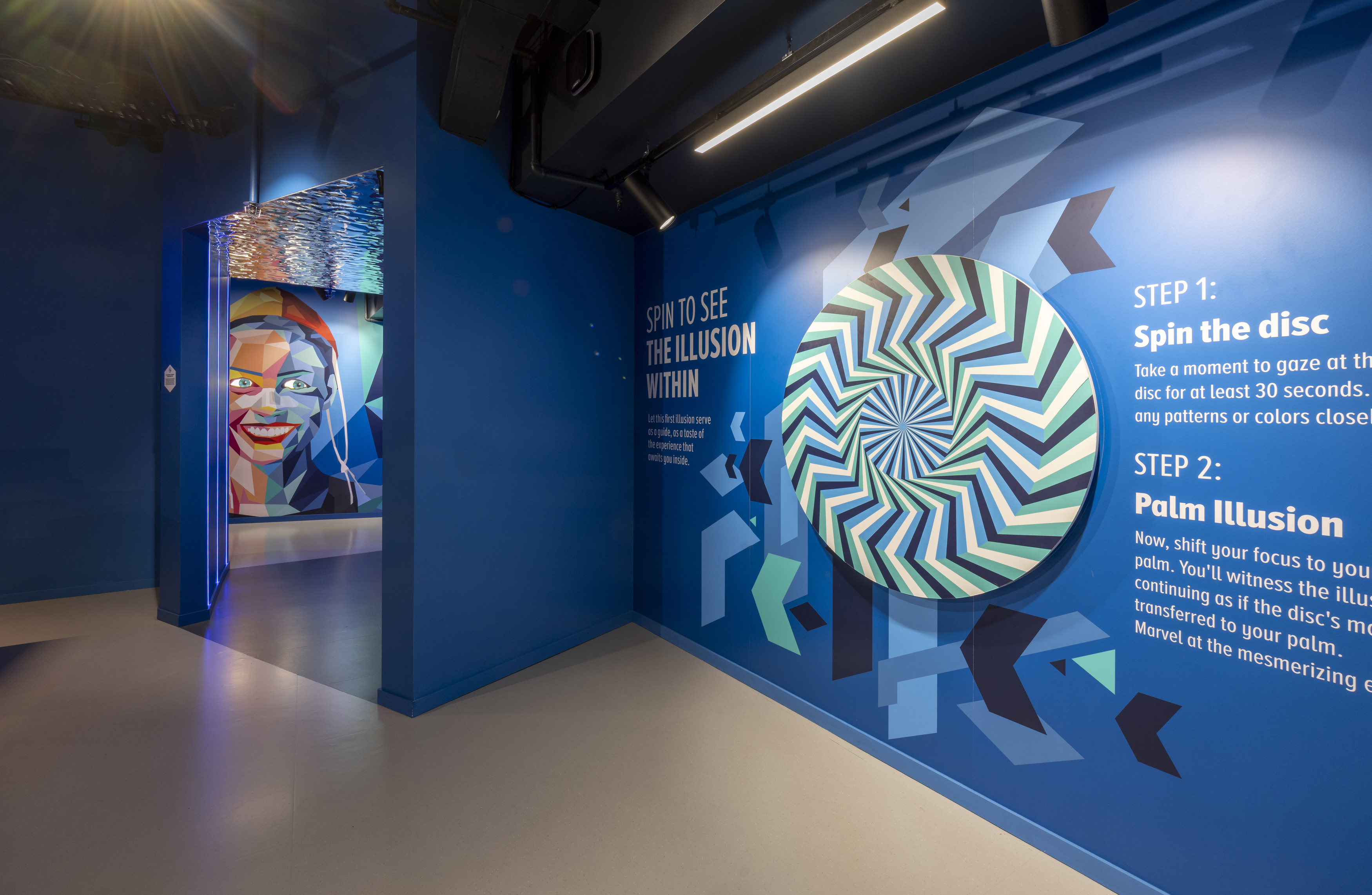
Photo credits: Museum of Illusions
The collaboration between Bruketa& and Lactalis began in 2023. Since then, they have worked together on several different projects.
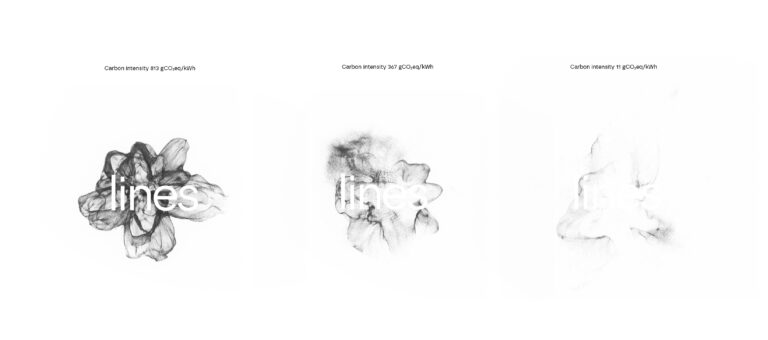
Visual identity for LINES – the Laboratory for Intelligent Energy Systems at the Faculty of Mechanical Engineering and Naval Architecture, University of Zagreb